My Afternoon With Renee
Getting a legacy film made is like opening a book that's been sitting on a shelf for decades. You know it’s there. You want to read it. You feel bad about not reading it. Then when you read it, you can’t imagine a world in which you never had read it.
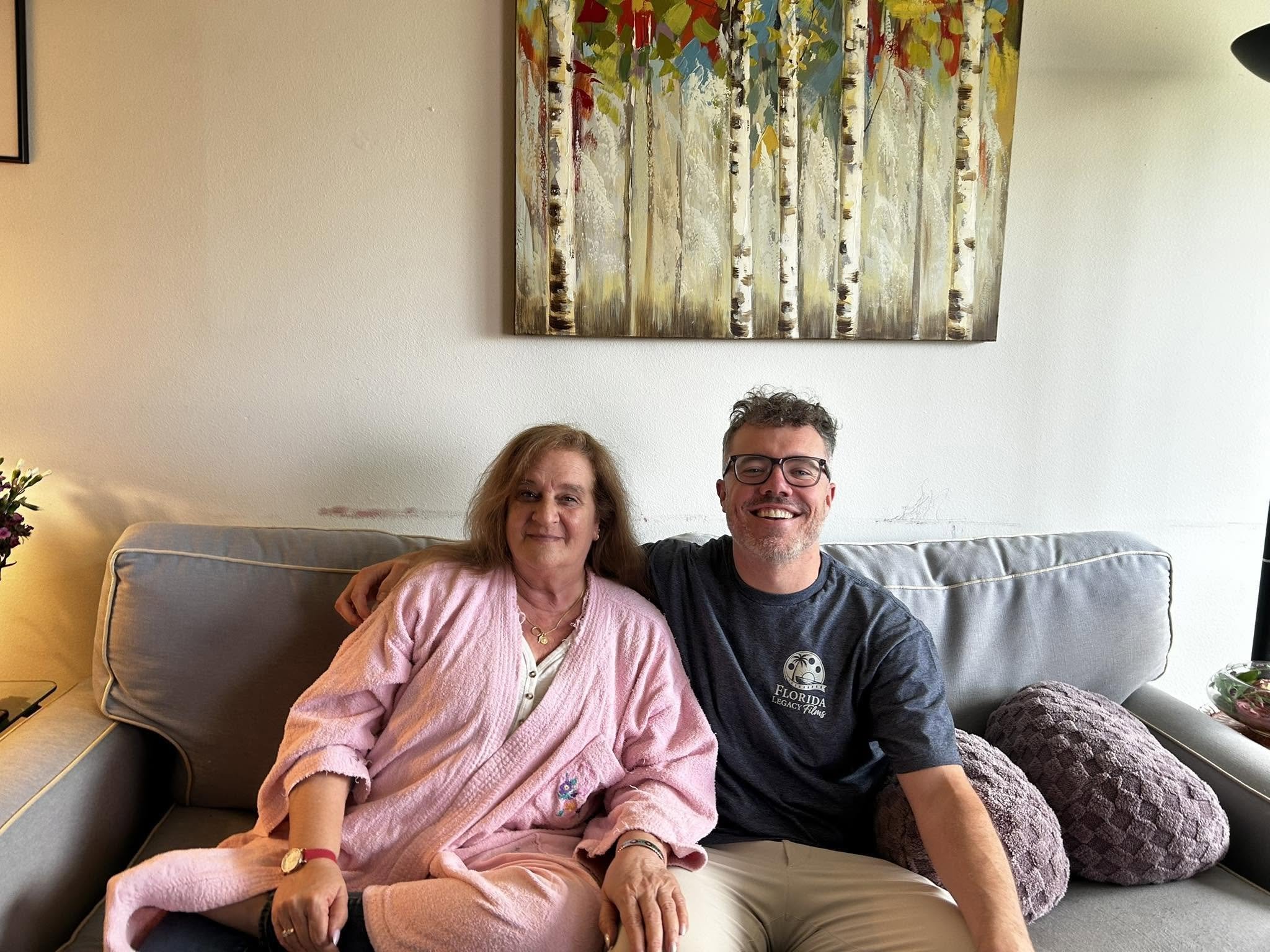
A couple months ago, I sat down with Renee. Her daughter Rachel and I went to high school together, and after Renee was diagnosed with cancer, Rachel decided it was time to preserve her mom's stories while she still had the chance to tell them herself.
Most people don't wake up one day thinking, "Today's the day we should record mom's life story."
Life gets busy, work gets in the way, kids grow up. You assume there will always be another afternoon to ask those questions you've always meant to ask.
Then one day, you find out there may not be.
I hate that it was cancer that gave me the chance to open Renee’s book, but I can’t imagine a scenario in which I never got the chance to.
Given her diagnosis, I didn't know what to expect interviewing Renee. I hadn't done a legacy film under these circumstances yet, and everyone handles difficult situations differently.
What I didn't expect was to spend so much of the afternoon laughing.
Renee is an incredible storyteller.
She remembers the details that make a story come alive. She remembers where she was standing, who was yelling, what everyone said, and the part that seemed terrifying in the moment but became hilarious years later.
She had me laughing about accidentally locking a one-month-old Rachel inside her pickup truck in the middle of a summer afternoon.
She described running around the truck trying every door, pounding on the windows while her neighbor called 911. Then, as the fire department smashed the window to rescue the baby, her husband, Randy, showed up with the spare keys.
You'd think that was the end of the story...
Instead, while carrying Rachel away from the truck, Randy tripped over a parking stop and sent the baby carrier flying and Rachel ended up in the hospital anyway.
Renee laughed telling the story, but you could still feel the panic she felt as a young mother. It perfectly summed up something I assume every parent eventually learns: sometimes you're doing your best, and s*** still hits the fan.
The stories kept coming.
Her daughter Rebekah crashing a Razor scooter on one of Pennsylvania's steep hills and needing stitches.
Her son Ryan secretly climbing onto the back bumper of his dad's work van wearing nothing but a diaper while his father unknowingly drove away.
Running out of gas on Dunlawton Bridge with six kids in the car and deciding the only reasonable response was to tell everyone to throw their hands in the air and pretend they were on a roller coaster while they coasted downhill toward the gas station.
Being boarded by pirates.
Getting arrested.
Twice.
Somehow, each story was crazier than the one before it.
One thing I appreciated was that Renee never tried to present herself as the perfect parent. She openly admitted when she made mistakes.
She laughed at herself. She didn't try to rewrite history. She was just being honest.
I think that's what made the interview feel so genuine. I’m grateful she trusted me enough to open up in that way.
As funny as those stories were, the conversation eventually shifted into more difficult chapters of her life.
With a child born with a rare medical condition, hospital visits weren't occasional like for most… it became everyday life.
She talked about learning new medical terms, traveling to specialists, spending nights away from home, and trying to make sure her other children still felt like they had a normal childhood.
Rather than working jobs with fixed schedules, Renee and Randy started their own carpet cleaning business. Probably not because they dreamed of owning a carpet cleaning company, but because it gave them the flexibility to divide responsibilities. If their daughter needed to be in the hospital, one parent could be there while the other stayed home with the other children.
It's the kind of decision that probably didn't feel extraordinary to them at the time, but when hearing her talk about it, you realize how many invisible sacrifices she’s made to give her children the best life possible.
Renee then started talking about biker bars, and I assumed we were headed toward another wild adventure.
Instead, she explained that a local biker community organized a fundraiser to help pay for her daughter’s medical care after insurance wouldn't cover treatment.
She stood on stage, shared her daughter’s story, and by the end of the night those bikers had raised $16,000.
Then, I was listening to Renee talk about her grandfathers, who she adored.
She described drinking ginger ale from glass bottles with her grandfather after school because he always saved the empty bottles for her to return to the grocery store. Thirty cents bought 30 pieces of penny candy, and to Renee at the time, that felt like a fortune.
She talked about Sunday dinners, Christmas traditions, Pirates baseball games, and the funny things her grandfather said every single week.
Those weren't dramatic moments. They were ordinary ones. But decades later, she remembers them so clearly.
That made me think about something I see in almost every interview I film. When people imagine preserving family history, they think about major milestones:
Your first job.
Your wedding.
Having children.
Becoming a grandparent.
Those are important. But what families also treasure are the smaller stories, like the phrases only one person ever said.
I’m getting choked up now writing this as I recall my grandpa calling me his “number one buddy.” Or my other grandpa calling my sister “his baby’s baby.”
Neither of them are here anymore, and I wish I had those on video.
Those are the things that disappear first if no one records them.
One of the most meaningful moments of my afternoon with Renee came near the end of the interview.
Renee said she wanted to raise her children differently than she had been raised.
She wanted them to hear "I love you" every day.
Every morning before school.
Every goodbye.
Every ordinary day.
Everything came back to making sure her kids always knew they were loved.
There were memories shared that afternoon that would have disappeared completely if they had stayed inside Renee's head. But there were also things shared that I think her kids may have heard for the first time.
Families assume they're preserving these stories for future generations. What usually happens is they discover things about each other right now.
Children hear stories they've never heard.
Grandchildren learn why certain traditions exist.
Parents finally explain decisions they made decades earlier.
The interview becomes valuable long before it ever becomes an heirloom.
If you had asked Renee to summarize her life, she probably would have talked about raising children, loving her husband Randy, her biker bars, and all of the other places life took her.
But after spending hours editing the footage from our afternoon, I particularly remember how she laughed. I remember how animated she became when she told a story. How she lit her cigarette. How she lit up when talking about her kids.
My afternoon with Renee is exactly why I started Florida Legacy Films.
I'm grateful Rachel and Renee trusted me to preserve that for their family.